It Was Never You—Everything Diet Culture Taught You Was Wrong
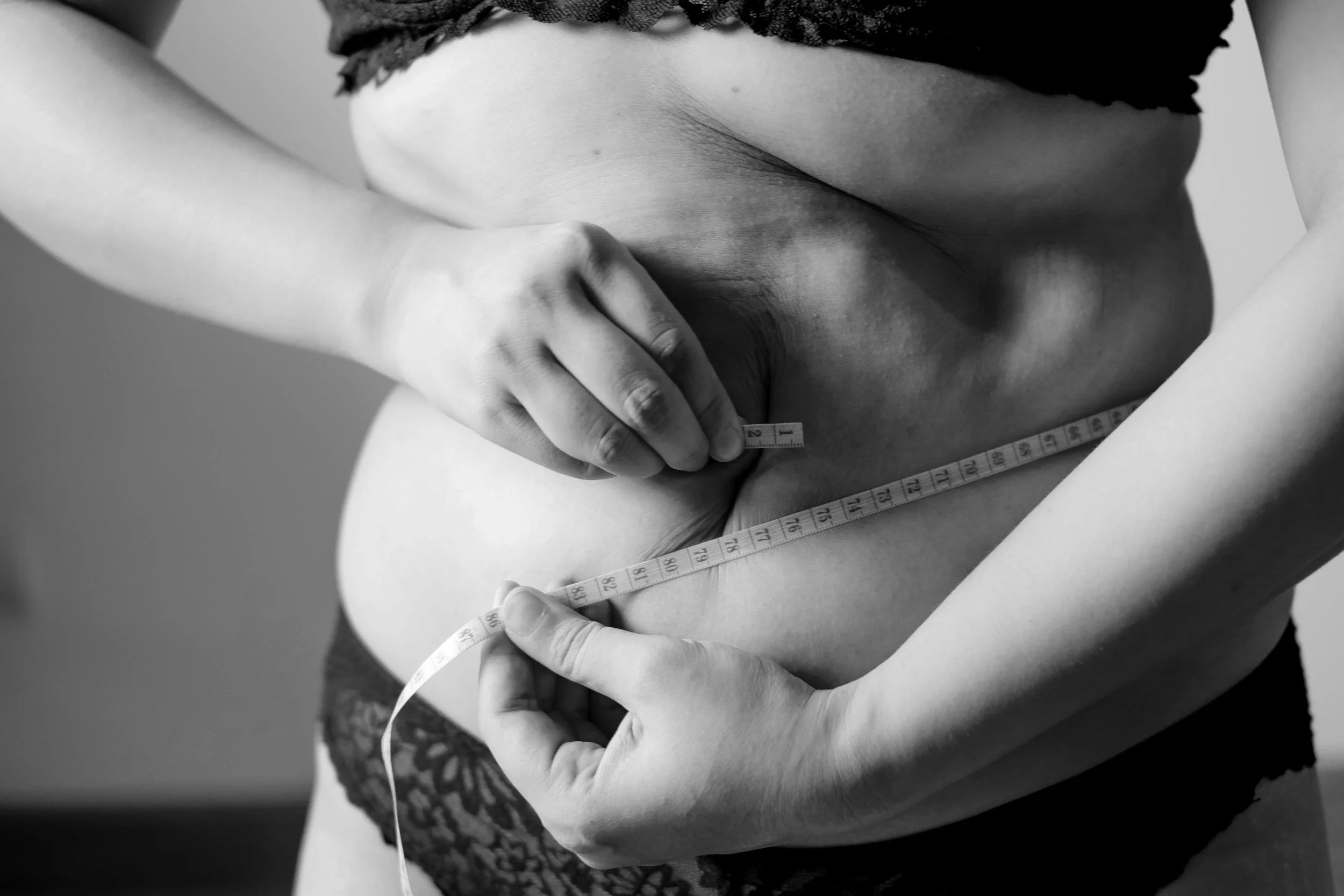
Healthy Weight Loss: Supporting Your Body, Not Fighting It
One of the biggest misconceptions about weight loss is that less is always better.
It’s not.
Your body was intentionally designed by God to adapt. When you consistently undereat, it doesn’t just keep burning energy at the same rate—it adjusts. It becomes more efficient. It conserves.
This is often referred to as metabolic adaptation, and it’s one of the biggest reasons women feel stuck despite doing everything “right.”
Not because your body is failing you—but because it’s doing exactly what it was designed to do: protect you.
Start With What Your Body Needs
Before creating a deficit, you need to understand your maintenance calories—the amount of food your body needs to sustain its current weight.
From there, a gentle 10–20% deficit allows your body to release weight without triggering unnecessary stress or survival responses.
When you go too low for too long:
Your metabolism can down-regulate
Energy levels drop
Hormones can shift
Cravings often increase
Your body may hold onto weight more tightly
This is where so many women unknowingly make their journey harder than it needs to be.
A supported body responds.
A stressed body resists.
Weight Loss Should Have a Rhythm
Another piece that often gets missed?
A deficit is not meant to last forever.
Your body is not designed to stay in a constant state of restriction. Even when done well, a calorie deficit is still a form of stress—and over time, that adds up.
Instead, think in terms of rhythms, not extremes.
A simple, supportive approach looks like this:
Spend a season in a deficit (fat loss phase)
Then return to maintenance calories for the same amount of time
So if you were in a deficit for 8 weeks, you would spend at least 8 weeks back at maintenance.
This allows your body to:
Recover
Rebuild
Regulate hormones
Support metabolism
Solidify the progress you’ve made
Then, if needed, you can move into another deficit phase.
This is how you work with your body instead of constantly pushing against it.
I know what you are thinking… “that will take sooo long!” But listen, if you keep doing what you’ve always done, how long has that taken you? You have probably been on this diet culture rollercoaster for YEARS. It is like a car that is stuck in a snowbank. Does it make more sense to keep pressing the gas pedal OR would it be better to put the car in reverse then move forward much easier and faster?
When Weight Loss “Stops,” It’s Not What You Think
If you’ve been here before, you already know this cycle…
You started losing weight, and it worked really well at first.
Then suddenly—it stopped.
So you did what most of us have been taught to do… you looked it up.
And diet culture told you:
“You’ve hit a plateau.”
“You need to do more.”
“Exercise more.”
“and eat less….”
So you tried it.
Maybe it worked for a short time…
Or maybe it didn’t work at all.
But either way—it didn’t last.
Because what’s actually happening isn’t a failure of effort.
It’s your body asking for support.
When you stay in a deficit too long or push too hard, your body begins to shift into protection mode. It slows things down, conserves energy, and resists further loss—not to work against you, but to keep you safe.
And what does it actually need in that moment?
Not more restriction.
More nourishment.
A return to intentional maintenance.
A break.
A chance to regulate and allow your body to feel safe again.
Track Progress Without Obsession
The scale is a tool—but it’s not the authority.
Your weight will naturally fluctuate day to day based on things like:
Hydration
Hormones
Digestion
Inflammation
Sleep
That’s why a single weigh-in doesn’t tell you much.
Instead, try this:
Weigh daily (same time, same conditions)
Add all 7 days together
Divide by 7 to find your weekly average
This gives you a much more accurate picture of your progress over time.
But even then—your weight is not the gold standard.
It is one data point.
Also pay attention to:
Progress photos
Measurements
How your clothes fit
Energy levels
Strength in your workouts
Overall well-being
Because real progress is about more than a number on a scale.
Don’t Skip Strength Training
If your goal is weight loss, strength training is not optional—it’s foundational.
When you lose weight without resistance training, your body doesn’t just lose fat… it can also lose muscle.
And muscle matters.
It supports:
A healthy metabolism
Blood sugar balance
Hormonal health
Strength and resilience
Long-term sustainability
Strength training communicates to your body:
“We need this. Keep it.”
While you may not be in an optimal place to build large amounts of muscle in a calorie deficit, you can preserve it—and that makes a significant difference in how your body functions and feels.
The Real Goal: Not Just Losing—But Keeping It Off
Here’s the part most plans never talk about…
If you do manage to lose all the weight by constantly pushing harder—eating less, doing more—what happens next?
As soon as the diet ends… the weight comes back.
Sometimes more than before.
Not because you failed.
But because that approach was never sustainable.
So let’s call it what it is:
If you can’t maintain it…
It didn’t actually work.
The goal is not just to lose weight.
The goal is to maintain that loss in a way that supports your body long-term.
And that only happens when your body is:
Nourished
Supported
Not stuck in a constant stress response
A Different Perspective on Weight Loss
Healthy weight loss is not about restriction, punishment, or trying to force your body into submission.
It’s about:
Learning your body
Listening to its signals
Using data as a tool, not a weapon
Supporting the systems God designed
Your body is not working against you.
It’s working for you.
And when you begin to partner with it instead of fight it, everything changes.
Ready to Take This Deeper?
If you’re reading this and realizing that maybe the issue was never you—but the approach…
You’re not alone.
Most of the women I work with are already doing so many things right. They care about quality food, they’re intentional, and they’re trying to support their bodies—but they’re missing the piece that brings it all together.
That’s exactly why I created EmpowerHER Nutrition Group Coaching + Course.
Inside, I teach you how to use your body’s data—like nutrition, symptoms, and patterns—to make empowered, informed decisions without shame.
This program is only open once or twice a year so I can fully support the women inside of it.
If you’d like to be part of the next round, you can join the waitlist:
→ here
Want Support Now?
If you’re ready now and don’t want to wait, I also offer a 1:1 version of EmpowerHER Nutrition, where you get the full course along with personalized coaching tailored to your body, your goals, and your unique needs.
You don’t have to figure this out alone.
If that feels like the right next step, you can reach out here:
→ unconformedwellness@gmail.com